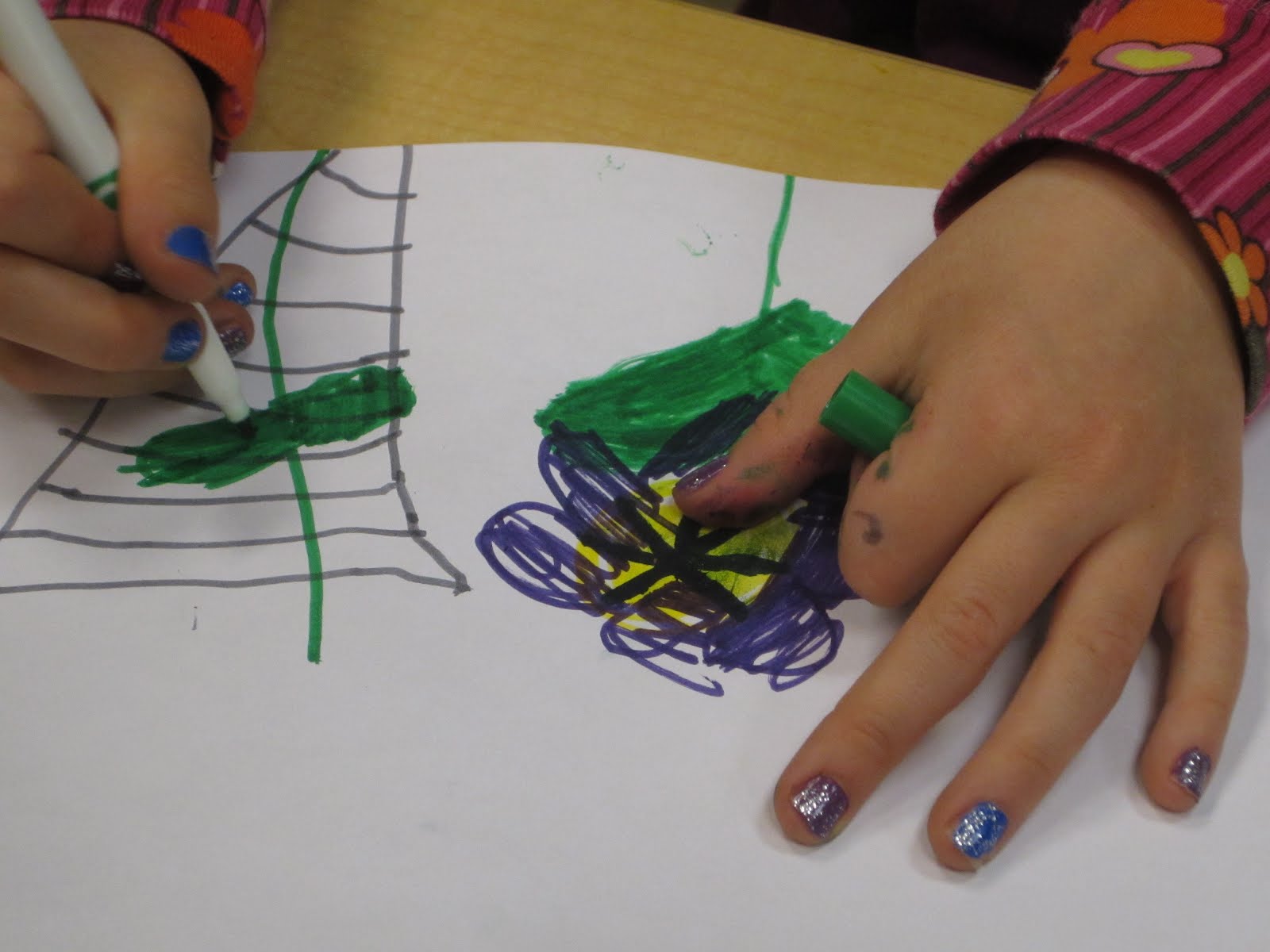
Interest in flowers has been growing and our focus on artists that paint flowers has been a helpful way to connect art, art history and nature. We have read several books about Georgia O'Keeffe and the children are fascinated in learning about her story of becoming an artist. At this age, children are looking to identify with the world around them in as many ways as possible. For example, re-telling 'stories' of how an individual became an artist, what their life may have looked like growing up, how or why they became interested in art , and what kinds of art they like to create are all questions that children are drawn to. It is absolutely amazing how much factual information our children learn from book discussions and conversations.

We continually explore beautiful art books and together look at reproductions of famous art painting , drawing attention to the unique art techniques and subject matters of world renown artists. It is amazing how our children are learning to identify by sight an art piece by Van Gogh, Dega and Georgia O" Keefe and are beginning to recognize and name some of the differences in the paintings as well as the similarities. Visual discrimination , vocabulary and recall skills are all reading readiness skills that are practiced through the these experiences.
We introduced two new games today; Art Lotto and Impressionistic Memory Game. Through both of these games children are exposed to a colorful variety of paintings from many countries and several centuries. Matching images that are the same encourages children to practice visual discrimination skills as well as memory skills. The children also learn to work cooperatively in small group settings as they take turns in the game.

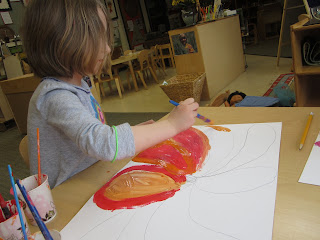


Over the past several days, the children have been practicing the skills of enlarging flowers in the style of Georgia O'Keeffe using pencils and copy paper. As the sense of enlarging became clearer for the children, we decided to expand our scope by trying to enlarge flowers on a larger paper and incorporating paint into the process. The children were very excited to paint and create flowers that more closely resembled those of Georgia O"Keefe. We had read that when Georgia O'Keeffe painted larger than life flowers, she generally used only two colors of paint. The dimension and depth of color was explored through shading color in the same color family. We discovered that by adding white paint or dark paint we were able to alter the shade of paint. After the children sketched their flower, they chose two paint colors they wanted to work. The children also needed to select the sizes of brushed they thought would work best for their painting- thin watercolor brushes for tiny areas as well as fuller brushes for the larger areas .